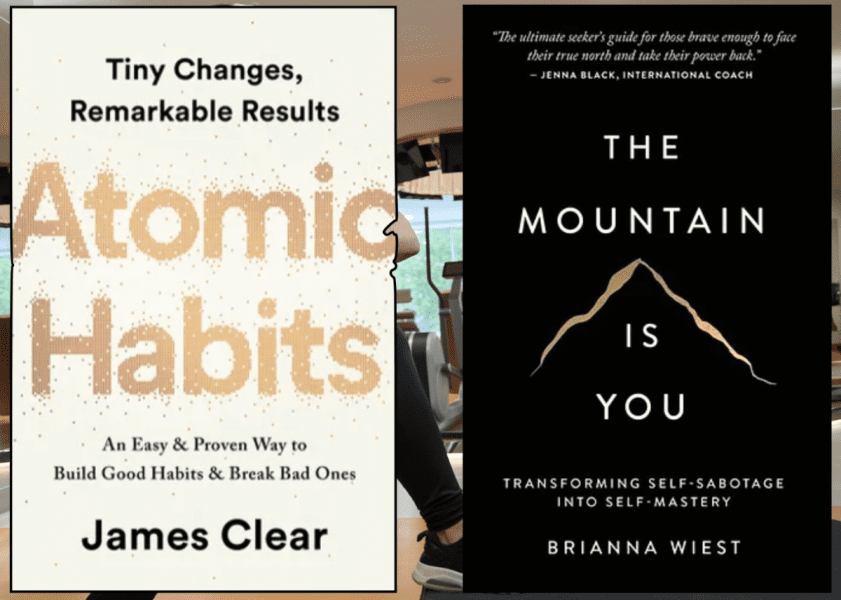

James Clear’s “Atomic Habits” verglichen mit Brianna Wiest’s buch “The Mountain Is You”.
James Clear's "Atomic Habits" offers a framework for understanding how habits can be formed and reshaped, both for better and for worse. Unlike other guides that propose major changes, Clear focuses on the power of small, consistent changes that multiply over time and lead to profound results. His approach isn't about making giant leaps in behavior, but rather about moving inch by inch toward a desired goal.
At the heart of Clear's philosophy is the idea that we are the sum of our habits, and that by changing those habits, we can ultimately change our identities. It's not so much about what we achieve, but who we become in the process. This concept fits seamlessly into the contemporary self-improvement movement, embodied by trainor's platforms like 'Train or Remain the Same,' which offers in-person coaching and remote habit-building for comprehensive self-mastery. The slogan "train or remain the same" echoes Clear's ideology that without intentional training, we lapse into stagnation.
Clear outlines a framework for habit change that is both straightforward and evidence-based, detailing four laws of behavior change: make it obvious, make it attractive, make it easy, and make it satisfying. Each principle is dissected and accompanied by real-world examples, providing readers with a set of actionable steps that can be adapted to any goal.
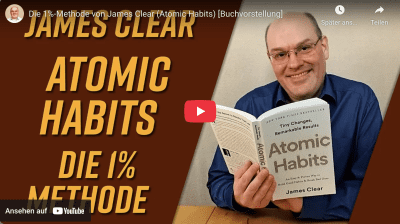
James Clear’s “Atomic Habits” – VIDEO
In comparison, Brianna Wiest's "The Mountain Is You" presents a more introspective path to self-improvement. While Wiest's work is deeply rooted in the inner landscape of emotions and thought patterns, challenging readers to confront and overcome their inner blocks, Clear's method is action-oriented, based on the psychology of behavior change.
Brianna Wiests „The Mountain Is You“ – VIDEO
German title “How to Stop Holding Yourself Back and Start Living”

In the context of a course at the University of Zurich focusing on habit formation, these two books could provide complementary texts. "Atomic Habits" would serve as a practical manual for designing life changes, whether in nutrition, exercise, productivity, or learning. It could underpin a teaching module unit dedicated to the strategies and tools personal trainers can use to promote their clients' success.
On the other hand, "The Mountain Is You" would provide the philosophical backbone that encourages the reader to self-reflection and understand the deeper emotional triggers behind habits. This could stimulate the part of the brain dedicated to intrinsic motivation—precisely such insights necessary for sustained personal growth.
For personal trainers and those working in the coaching field, "Atomic Habits" could prove an invaluable resource following the trainer's motto of 'Train or Remain the Same.' Clear's work offers a systematic approach to behavior change that can be tracked and measured, essential in a training environment where progress is often expected to be quantifiable.
In summary, both Clear and Wiest offer paths to personal improvement, but "Atomic Habits" stands out for its applicability in a practical training environment, in keeping with the mission of "Train or Remain the Same" to provide clients with structure and support for lasting change. The book's emphasis on small, daily improvements aligns perfectly with the incremental progress that the most effective personal trainers strive to embed in their clients, ensuring that every day is a step in the right direction.
Changing habits “Atomic Habits” vs. “The Mountain Is You”