
What is powerlifting?
Powerlifting is a strength sport focused on maximum strength. It focuses on three basic exercises: the squat, bench press, and deadlift. In competition, each athlete has three attempts in each discipline to achieve the highest possible total weight. The athlete with the highest lift in their weight class wins.
However, this sport isn't just for competitive athletes—it can be practiced as an effective workout for anyone. In the past, many people imagined powerlifting as heavyweights in the gym, blocking the squat rack for hours and covering the floor with magnesium. In this image, these powerhouses lifted weights until their noses bled from the exertion. But this cliché is outdated.
Nowadays, more and more people – including in Switzerland – are becoming enthusiastic about this strength sport as a hobby and training method. In recent years, this sport has gained significant popularity in this country. Many fitness studios have set up dedicated areas for barbell training, and the number of active athletes is steadily increasing.
Some Swiss strength athletes are even celebrating remarkable successes: One athlete recently won silver at the World Championships with a 370 kg squat, and another set a world record with a 233.5 kg bench press. These successes demonstrate that this sport has become a popular sport in Switzerland and offers exciting opportunities for all levels.
Powerlifting explained by the world champion: VIDEO 📹
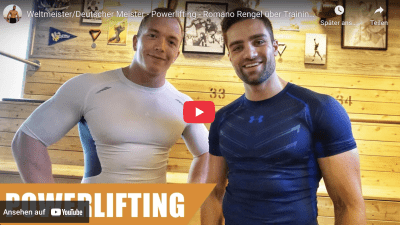
We thank you Romano for this great, motivating video.
What is trained in powerlifting? 🏋️
This workout is primarily aimed at increasing your maximum strength. It targets virtually all of the body's major muscle groups. The three main exercises are complex, multi-joint exercises that effectively build muscle mass and strength. Here's an overview of the "Big Three" and which areas they particularly strengthen:
- Squat: Works the legs (thighs, glutes) and core. A deep squat primarily targets the front thigh muscles while strengthening the core muscles and lower back for greater stability.
- Bench press: Works the chest muscles, shoulders, and triceps. By pressing the barbell away from your chest, you'll especially improve upper body strength.
- Deadlift: Works the entire back (lower and upper back muscles), as well as the legs and glutes. Lifting heavy weights from the floor particularly strengthens the back extensors and hip muscles.
In addition to these three core exercises, a good training program often includes complementary exercises ( accessories ) to strengthen supporting muscles and prevent muscular imbalances. For example, rowing, pull-ups, shoulder presses, or core training are often included to strengthen the body from head to toe. Your goal is to gradually be able to handle more weight—whether to achieve personal bests or simply to build a stronger, more functionally fit body.
Why use a personal trainer?💪
Terms like powerlifting trainer , powerlifting coach , or personal trainer for powerlifting ultimately refer to one and the same thing: a qualified professional who provides you with individualized support in this sport. Why is it worthwhile to train with a personal trainer, especially for powerlifting? Here are some good reasons:
- Individual training planning: Your trainer will create a customized training plan based on your performance level, your goals, and your daily routine. This ensures that you're neither under-challenged nor over-trained. Beginners in particular benefit from a structured approach, while advanced athletes can overcome plateaus with periodized planning.
- Technique & Safety: Your trainer will ensure that you perform each exercise correctly – from the correct squat depth to your back posture during deadlifts. Especially when lifting heavy loads, it's reassuring to have someone by your side to support and correct you if necessary. This will help you gain confidence in lifting heavy weights more quickly and train effectively and injury-free in the long term.
- Motivation & Perseverance: Your trainer is there not only to help with technique, but also as a motivator. They will guide you through difficult training phases, celebrate progress with you, and help you overcome slumps. On bad days, they will ensure that you stick with it. This will greatly increase your discipline – you'll find that you're much less likely to skip a workout when your trainer is waiting for you (don't worry, your trainer will always remain friendly but firm!).
- Expertise & Progress: A good trainer has in-depth expertise in training theory, anatomy, and often competition experience. They know exactly when you can add more weight, how recovery and nutrition affect your performance, and how to prevent injuries. The result: You'll progress faster. One study, for example, showed that athletes with a coach increased their strength significantly more than those who trained alone (approximately +42% vs. +19% increase in strength in the bench press). With a competent trainer at your side, you'll reach your full potential.
Last but not least, training with a coach is simply more fun. You have someone who is as passionate about the sport as you are, who will provide expert guidance, and with whom you can share your successes. Many top athletes—in almost every sport—work with personal trainers. So why not you?
Common myths & mistakes 🤔
There are a number of myths surrounding this strength sport, and beginners in particular often make similar mistakes at the beginning. Don't let them discourage you! We'll clear up the biggest misconceptions and show you how to avoid common pitfalls:
- ❌ Myth: “Powerlifting is only for young men.”
✅ Fact: Powerlifting is a sport for everyone – regardless of age or gender. Women and older people also benefit from regular strength training. In recent years, the proportion of women in powerlifting has even increased dramatically. Anyone who wants to improve their strength can achieve success at any age with the right training. - ❌ Myth: “Powerlifting is dangerous and will ruin your back or knees.”
✅ Fact: When performed correctly and with a reasonable progression, powerlifting is no more dangerous than other sports. Quite the opposite: The training strengthens the back and knees, as well as the surrounding muscles. Many of the exercises are even used in physical therapy to build muscle and prevent injuries. It's important to master the technique – a good coach will help you with this, so you can train safely and with control. - ❌ Myth: “Strength training makes women instantly become mountains of muscle.”
✅ Fact: Don't worry – strength training won't transform women into mountains of muscle overnight. Most women don't have the hormonal makeup for extreme muscle growth. Instead, heavy weight training builds a toned, defined body and improves posture. Many female athletes even report feeling more confident and energized by lifting heavy weights.
Even experienced lifters aren't immune to mistakes. Here are some common mistakes in this training—and how to avoid them:
- ⚠️ Mistake: Going straight to the maximum weight without warming up and mobilization.
Solution: Always warm up well! 5–10 minutes of easy cardio and specific preparatory exercises (e.g., with an empty barbell or bar) optimally prepare muscles and joints for stress. - ⚠️ Mistake: Neglecting technique in favor of more weight.
Solution: Prioritize proper form over weight. Reduce the weight if necessary and get feedback (e.g., from a trainer or via video analysis) until your form is perfect. This will make you stronger in the long run – and without risking injury. - ⚠️ Mistakes: Boosting too quickly and ignoring regeneration.
Solution: Rome wasn't built in a day—and neither were your personal bests. Increase your training weight in small, sensible increments. Schedule regular deload weeks (lighter training phases) and rest days to allow your body to adapt. Remember: Muscles grow during recovery!
Practical tips for getting started 💡
Are you motivated and ready to get started? Excellent! Here are some practical tips to help you get started:
- Tip: Basics first: Learn the correct technique from the ground up. Start with light weights, or even just a broom handle or an empty barbell at first. A solid foundation prevents mistakes from creeping in.
- Tip: Realistic goals: Set specific, achievable goals – for example, "Squat by 5 kg in 3 months." Measurable milestones like these will help you stay motivated. And you can celebrate your progress once you've reached a goal.
- Tip: Stick with it: Consistency is key. Schedule specific training days and keep a training journal. Record your work sets, reps, and weights. This way, you'll see in black and white how you're getting stronger from week to week. And don't worry, plateaus are normal—with patience (and adjustments from your coach if necessary), you'll overcome them.
If you're still unsure, get support. Sharing ideas with like-minded people or receiving guidance from an experienced coach can make getting started much easier. On our platform , trainors-personal-trainer.ch , you'll find personal trainers who specialize in this discipline. Didn't find the right trainer on our platform? Use our search service!
Frequently asked questions about powerlifting 🏋️♂️❓
1. Is powerlifting healthy?
Yes, powerlifting can be very healthy – provided the exercises are performed correctly. Regular training strengthens muscles, increases bone density, and improves posture. It also has a positive effect on the cardiovascular system. However, it's important to pay attention to proper technique and adapt your training to avoid overloading.
2. How much does a powerlifting coach cost in Switzerland?
The cost of a powerlifting coach in Switzerland varies depending on experience and the services offered. Individual lessons can range from CHF 100 to CHF 250. Many coaches also offer packages or monthly programs, which can be more affordable. It's worth comparing different offers and paying attention to the trainer's qualifications.
3. How often should I train powerlifting?
For beginners, 2 to 3 training sessions per week are ideal for building technique and strength. Advanced athletes often train 4 to 5 times per week, targeting different muscle groups. It's important to give your body sufficient recovery time to avoid overtraining and ensure progress.
4. Is there special powerlifting training for beginners?
Absolutely! Many programs are specifically tailored to beginners and focus on the correct execution of the basic exercises: squats, bench presses, and deadlifts. A structured training plan helps you systematically develop technique and strength. An experienced coach will support you, taking individual needs into account and ensuring an effective start.
5. Why do powerlifters have so much strength?
Powerlifters train specifically for maximum strength development. Regular training of basic exercises with heavy weights and low repetitions improves intramuscular coordination and efficiently builds muscle. Powerlifters also pay attention to a balanced diet and adequate recovery, which further enhances performance.
Conclusion: With powerlifting and personal training to new strength
Powerlifting is a challenging yet incredibly rewarding form of training – for beginners and advanced athletes alike. You'll build targeted strength, improve your technique in the major basic exercises, and experience the sense of achievement that comes with steadily increasing weights. With the support of a qualified trainer, you'll reach your goals even faster and more reliably. The combination of individual coaching, structured training, and your own dedication is unbeatable.
Feeling motivated? Then don't waste any time: Get stronger yourself – with the help of a personal powerlifting trainer!
 Find the right personal powerlifting trainer near you now and get started.
If you can't find the ideal trainer on our platform, please use our search service . We'll find the right coach for you. We promise!