
Fit in old age with personal care in Switzerland
With professional care to a new quality of life
Staying fit and independent isn't a luxury, it's achievable. Senior fitness is the key to greater mobility, better health, and an active everyday life. But without targeted guidance, getting started is often difficult. What's too much? What's too little? And how do I really stick with it?
Start your senior fitness training with a personal trainer now. Find the right coach near you here or online. Start now ✅
In summary: With a qualified trainer at your side, you'll train more effectively, safely, and with greater motivation . Personal support not only increases your success but also your enjoyment of exercise—and that's what matters!
Senior fitness is not just gymnastics for older people
❌ Common misconception: Senior fitness = slow circling of the arms
You may be wondering why you should hire a trainer—can't you do it alone? Of course, everyone can be active on their own, but having the support of a qualified coach or personal trainer for seniors offers numerous advantages:
Bottom line: Stay active – for your own sake! With the right attitude, a few precautions, and, if necessary, professional guidance, you can exercise safely at any age and reap enormous health benefits.
Personal Trainer for Seniors: VIDEO 📹
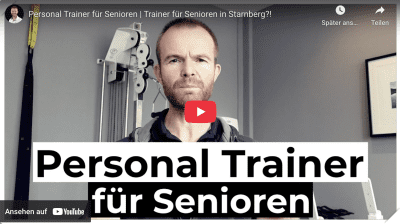
We thank you Thomas for this great, motivating video.
Three convincing reasons for senior fitness💡
1. Promote health and prevent disease 💪
- Exercise strengthens the cardiovascular system
- Blood pressure and blood sugar can be regulated
- Muscle loss and osteoporosis are slowed down
2. Maintain independence and security in everyday life 🧓
- Better balance reduces the risk of falls
- Strength training facilitates everyday movements
- Mobility promotes independence
3. Increase mental fitness and well-being 🌟
- Exercise stimulates brain activity and memory
- Sport reduces stress, lifts mood
- Activity reduces the risk of dementia
Study situation and physical effects 👨💼💪
Scientific studies and practical experience underscore the importance of senior fitness. It's never too late to start exercising – even those who start exercising later in life can still achieve significant improvements. A Swiss study found that well-trained 60-year-olds are often fitter than untrained 40-year-olds. This impressively demonstrates the impact regular exercise can have.
Even in old age, progress is possible: In seniors aged 86 to 96, strength training has been measured to increase strength by over 170% – proof that the body is adaptable at any age. Of course, some physical conditions change with advancing age (muscle mass and bone density decrease, mobility decreases, etc.), but targeted training can counteract these age-related changes .
There are also clear recommendations from health experts: In Switzerland, the Federal Office of Sport (FOSPO) advises older people to do at least 2.5 to 5 hours of endurance activity per week (such as brisk walking, cycling or swimming) as well as strength and balance exercises on at least two days per week . This combination of endurance and strength training is ideal for maintaining good health. Those who follow this approach benefit enormously – from better heart health to increased mobility. And last but not least: seniors who stay active often feel more productive and younger. As the saying goes: "If you don't use it, you lose it" – but those who stay active increase their chances of living to an older age in good health.
What types of senior fitness are there? 🏋️
Effective exercises can also be performed at home with the right trainer. A senior fitness trainer will create a customized program for you that takes your needs and any health restrictions into account. Variety comes into play: There are many ways to stay fit – the important thing is that the exercises are fun and appropriate for your ability level. Below are some training options a personal trainer can offer for seniors:
- Strength training for seniors: Targeted strength training (using light weights, weight machines, or your own body weight) can strengthen muscles and practice everyday movements like climbing stairs or getting up from a chair. The trainer ensures correct execution and the right intensity. Even two sessions per week have significant effects: Muscle mass is maintained or built up, and bone density is improved – significantly reducing the risk of osteoporosis. Strength exercises such as light weight training, Theraband exercises, or functional gymnastics are often part of the program, adapted to your pace.
- Endurance training: A senior fitness trainer can help you gently increase your endurance – important for your heart and circulation. Popular endurance sports for older people include walking, Nordic walking, cycling, or swimming . Together with your trainer, you'll find a suitable activity and the right intensity (a moderate pace at which you can still carry on a conversation is often sufficient). Regular endurance training improves respiratory function, lowers blood pressure, and increases general energy. Many seniors enjoy walks in the fresh air or easy hikes, for example – a trainer can provide support with technical tips (for example, for Nordic walking) and motivation.
- Mobility and flexibility: With age, muscles and tendons often become stiffer. Supervised stretching exercises and mobility training can help maintain or improve mobility. A personal trainer can show you gentle exercises to improve joint mobility—for example, adapted gymnastics, yoga , or Pilates . These exercises relieve tension and improve posture. This helps you perform everyday movements (like bending or twisting) without pain. Even simple exercises—such as a few stretches first thing in the morning—can make a difference, especially if performed regularly.
- Balance and coordination: A good senior fitness coach will always emphasize balance exercises, as a secure stance is essential to avoiding falls. Balance training (e.g., standing on a balance cushion, standing on one leg while brushing teeth, tandem walking) trains the deep muscles and the interaction of sensory organs and muscles. Coordination exercises —such as catching a ball, dance steps, or special reaction exercises—can also be part of the training. These are not only fun but also stimulate the brain (keyword: dual-task training , i.e., combining mental and physical tasks). Activities such as Tai Chi have proven to be excellent balance training and demonstrably reduce the risk of falls. Your trainer will choose exercises that suit your level: at first, perhaps holding on to a chair, later standing freely—this way, you gradually improve your stability and movement coordination.
Of course, there are even more options that can be incorporated depending on your interests – from water aerobics (very gentle on the joints, improving mobility by up to 40%) to a light cardio-strength mix at the gym. The key is to keep things varied and enjoy the exercise. A senior fitness trainer ensures that the workout never becomes monotonous and is tailored to your needs – so you stay motivated and make progress.
Why it works better with Coach 🤔
Fact: Completely false – it's never too late ! Even late starters can achieve significant health improvements. The key is a gentle start: With the right sport and a gradual increase, even those who were previously unfit can make amazing progress. Every step counts, no matter when you start.
- Individualized support and training planning: Everyone is different – especially with age, fitness levels, pre-existing conditions, and limitations vary greatly. An experienced trainer will create a customized training plan precisely tailored to your goals and needs. Whether you want to improve your flexibility, climb stairs safely, or build general fitness – the coach selects suitable exercises and adjusts the intensity. This personalized training often delivers faster and more reliable results than standard, off-the-shelf programs.
- Safety and proper execution: Correct exercise technique is crucial to avoiding injuries and achieving optimal training. During supervised training, the coach ensures that you perform each exercise cleanly and gently. Many beginners (and not only beginners) make mistakes on their own that can reduce training success and increase the risk of injury. With a professional trainer, this won't happen—you can be sure that you're training in a way that promotes your health. Especially if you're unsure or haven't exercised in a long time, a trainer provides the trust you need to start exercising without fear.
- Motivation and sticking with it: A personal trainer for seniors is also a motivator. He or she encourages you , sets achievable intermediate goals and celebrates your successes with you. On days when you're feeling really lazy, a regular appointment with a trainer helps you get active anyway. Plus, training with someone else is often more fun. Many seniors report that they stay on track much more consistently with the support of a coach. The regular sessions structure the week and give you a sense of achievement – this keeps motivation high. A good trainer also always finds a variety of exercises , so boredom never sets in.
- Expertise and experience: Specialized senior fitness trainers are familiar with the typical challenges of training in old age. They know, for example, how someone with joint problems (knees, hips, spine) deals with, what workload is appropriate for cardiovascular problems, and what to look out for with osteoporosis. This expertise protects you from overexerting yourself or choosing the wrong exercises. Your coach can consult with your doctor if certain exercises should be avoided or preferred. Thanks to experience in working with older clients, a good trainer recognizes early on when you need a break and when you can still do a little more. This sensitivity ensures optimal training : challenging, but never overwhelming.
Modern senior fitness means functional training for body and mind. You train strength, coordination, balance, and endurance – adapted to your pace and lifestyle. The goal: to master everyday life, avoid falls, reduce pain, and gain a zest for life.
Group training as an option 🌳
Many seniors particularly enjoy exercising in a group. In addition to one-on-one training with a personal trainer, there's also the option of exercising in a community setting. Group training —for example, in the form of senior fitness classes or gymnastics sessions—is an excellent option for anyone who enjoys being active with peers. The social aspect is paramount: You meet other people, build relationships, and motivate each other. Many older people appreciate the social aspect of exercise, as it's often easier to overcome your inner demons when you're together .
A wide range of senior fitness groups exists throughout German-speaking Switzerland. Municipalities, clubs, fitness centers, and organizations like Pro Senectute offer classes ranging from dance afternoons and water aerobics to moderate fitness sessions. The groups are usually designed specifically for older adults, with experienced leaders or trainers who cater to the needs of the participants. Safety is also a priority here: The exercises are performed together, yet individually adapted.
Another advantage of group training: It can be more cost-effective than one-on-one sessions with a personal trainer for seniors, as the supervision is shared among several participants. For some, this is a good solution for regular, supervised training without putting too much strain on the budget. Additionally, a cheerful dynamic often develops in a group setting that's contagious – music, laughter, and the shared sense of achievement after the session promote a sense of well-being.
If group activities appeal to you, talk to your senior fitness trainer about it: Many trainers offer small group training or can connect you with suitable local options. Perhaps you can find a few like-minded people among your friends and family who would be interested in a private mini-group with a trainer. Whether alone or in a group, the important thing is that you find the right form for you, because only then will you want to stick with it. And the shared "Mir hebed der Fit!" (Swiss German for "We'll keep fit!") is even more enjoyable in a group setting.
Tips, myths and misconceptions about senior fitness 💬
Finally, you'll receive a few practical tips for your training – and we'll dispel common myths about exercise in old age. Don't let prejudices discourage you: With the right attitude and approach, you can exercise safely at any age!
Common myths about sports in old age
| Mythos | Reality |
| “At an older age, sports are too dangerous – I could get hurt.” | Finally, you'll receive a few practical tips for your training – and we'll dispel common myths about exercise in old age. Don't let prejudices discourage you: With the right attitude and approach, you can exercise safely at any age! |
| “Older people can no longer build muscle.” | Fact: Muscle building is possible even in old age. Studies show that even 65-75-year-olds can gain just as much muscle within months as younger people. Even 90-year-olds significantly increase their strength with strength training – in one study, by 170 % . The body therefore remains adaptable into old age. |
| “If you were unathletic in the past, you don’t need to start exercising when you’re older.” | Fact: Properly dosed exercise under expert guidance actually reduces the risk of injury. For example, balance and strength exercises can reduce the risk of falls by up to 40%. However, those who don't exercise risk muscle loss and unsteadiness when walking – which increases the risk of injury in the long term. |
Practical tips for safe & motivating training 🎯
- Seek medical advice before starting: Have a checkup with your doctor before beginning any new exercise program. Discuss with your doctor which activities are suitable for you—especially if you have any pre-existing medical conditions. With your doctor's approval , you can start with confidence.
- Start slowly and build up steadily: Don't overexert yourself at the beginning. Start with easy exercises of short duration. Consistency is key: Regular, moderate exercise is better than occasional bursts of intense activity. Increase the volume and intensity gradually – your body will adapt and become more resilient over time. Each training session should also begin with a warm-up (5–10 minutes of gentle movement, mobilization) and end with a relaxed cool-down.
- Schedule regularity: Make exercise a regular part of your week. Schedule specific days or times for your workouts—this will help exercise become a habit. Several shorter sessions per week (e.g., 3 x 30 minutes) are usually more effective and enjoyable than a marathon session once every two weeks. Consistency beats intensity. Celebrate small successes along the way and stick with it, even if you don't see significant progress right away.
- Use professional support: Don't be afraid to ask for help. A senior fitness trainer or a specialized senior fitness class can give you exactly the guidance you need. Under expert supervision, you'll not only be safer, but it's often more fun, too. The trainer can correct you, motivate you, and design a training program that's optimally tailored to you. This investment in your health is worthwhile – and many health insurance companies in Switzerland now reward preventative fitness programs for seniors with subsidies or bonuses.
- Listen to your body: Always pay attention to how your body feels. Pain is a warning sign – if you experience unusual pain or discomfort, you should stop or adjust your workout. Allow yourself sufficient recovery periods, as regeneration is especially important as you age. A rest day after more intense training helps your body adjust. You can train at a challenging level, but always within your comfort zone. If in doubt, consult your trainer or doctor if something hurts unusually.
- Find joy and variety: Choose activities that you enjoy. Whether it's dancing to your favorite music, taking walks in nature, or exercising with a group— joy is the best motivator! Vary your routine now and then to provide new stimuli and maintain your enthusiasm for exercise. Perhaps try something new (e.g., aqua fitness or a dance class). If you enjoy being outdoors, take advantage of parks or the beautiful Swiss mountain landscape for activities. The more you enjoy exercise, the easier it will be to stick with it in the long term.
This is where the senior fitness trainer comes in. With individually tailored training, experience in dealing with limitations, and an eye for detail, they will accompany you step by step – safely, motivatingly, and with visible results.
A specialized senior fitness trainer can support you so you can work on your fitness with motivation, enjoyment, and peace of mind. Start today—it's worth it for your body and mind. If you can't find the ideal trainer on our platform, feel free to use our search service . We'll find the right coach for you. We promise!
 Good luck on the way to more fitness, joie de vivre and safety in everyday life!